Introduction
The SpaceNews article about Tilebox launching verifiable AI workflows for satellite data highlights an important shift happening in both the AI and space industries: moving from AI that gives answers to AI that can prove how it arrived at those answers. This concept is increasingly known as Verifiable AI. (Payload)
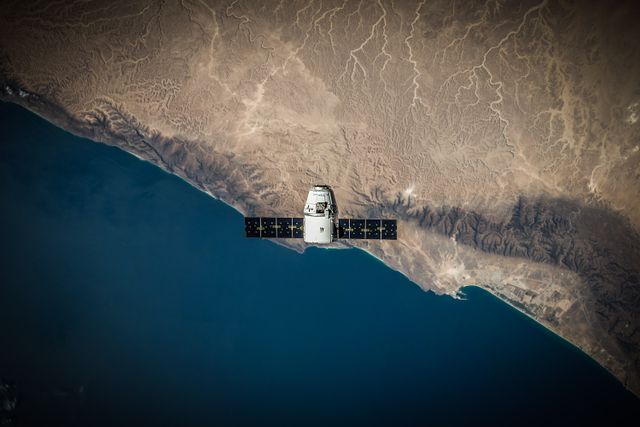
As satellite data grows into petabytes of information, humans cannot manually analyze everything. AI is becoming essential. However, organizations need to trust AI-generated insights before making billion-dollar decisions, government policies, environmental actions, or military assessments.
This is where verifiable AI enters the picture.
1. What Is Verifiable AI?
Simple Definition
Verifiable AI is an AI system that can show:
- What data it used
- What steps it performed
- How it reached a conclusion
- Whether the result can be reproduced
Instead of saying:
“Trust me, this is the answer.”
It says:
“Here is the evidence, workflow, data source, and reasoning path behind the answer.”
Why It Exists
Traditional AI often behaves like a black box.
You ask a question.
It gives an answer.
But you don’t know:
- Which data was used
- Whether the data was reliable
- Which model generated the answer
- Whether the answer can be reproduced
Tilebox aims to solve this trust problem for satellite intelligence workflows. (Payload)
Problem It Solves
Organizations need trustworthy AI for:
- Climate monitoring
- Agriculture
- Disaster response
- Defense intelligence
- Infrastructure planning
- Environmental compliance
Wrong answers can be extremely expensive.
2. Why Is It Important?
Business Impact
Companies need auditable decisions.
Examples:
- Insurance claims
- Crop monitoring
- Supply chain tracking
- Carbon accounting
Verifiable AI creates confidence in automated decisions.
User Impact
Users can:
- Check evidence
- Validate conclusions
- Understand results
Trust increases significantly.
Industry Impact
This may become a standard requirement for:
- Government contracts
- Regulated industries
- Defense systems
- Critical infrastructure
Future Relevance
As AI becomes more autonomous through agents, organizations will increasingly require proof and traceability. Many experts see governance and observability as major future requirements for AI systems. (Reddit)
3. How Does It Work?
Step-by-Step Workflow
Step 1: Collect Satellite Data
Sources may include:
- Optical imagery
- Radar imagery
- Hyperspectral imagery
- Weather data
Tilebox already supports multiple satellite data sources. (ObservationData.com)
Step 2: Execute AI Workflow
AI models analyze:
- Land changes
- Crop conditions
- Infrastructure
- Environmental events
Step 3: Record Every Action
The system tracks:
- Data source used
- Processing steps
- Models involved
- Outputs generated
Step 4: Produce Evidence Trail
Users can inspect:
- Input data
- Intermediate results
- Final conclusion
Step 5: Verification
The workflow can be rerun and audited.
Easy Analogy
Imagine a student solving a math problem.
Traditional AI
Shows only:
Final Answer = 42
Verifiable AI
Shows:
- Formula used
- Calculation steps
- Supporting evidence
- Final answer
Teachers trust the second approach much more.
Real-World Workflow
Farmer asks:
“Is my crop stressed?”
AI workflow:
- Retrieves satellite imagery
- Runs vegetation analysis
- Detects abnormalities
- Generates report
- Shows evidence
The farmer can inspect exactly why the conclusion was reached.
4. Real-World Examples
Tilebox
Provides:
- Satellite data orchestration
- Workflow execution
- AI workflow transparency
- Infrastructure scaling
Its platform focuses on making geospatial AI more explainable and reproducible. (Payload)
Google DeepMind
Built AlphaEarth Foundations, which combines large Earth-observation datasets into unified representations of the planet. (Reddit)
European Space Agency
Released Tessera, a foundation model trained on Earth observation data to generate information-rich environmental maps. (Phys.org)
EarthSavvy
Uses satellite intelligence combined with natural-language interfaces to answer real-world questions for non-geospatial users. (Tilebox)
5. Benefits
Greater Trust
Organizations can verify outputs.
Better Compliance
Supports audits and regulations.
Reduced Risk
Errors can be traced and corrected.
Faster Decision-Making
Users spend less time validating results manually.
Reproducibility
Different teams can reproduce findings.
Competitive Benefits
Companies adopting verifiable AI gain:
- Higher customer trust
- Easier enterprise sales
- Better government adoption
- Stronger regulatory compliance
Long-Term Value
Trust may become the most valuable feature of AI systems.
Many future buyers will ask:
“Can you prove your AI’s answer?”
rather than
“How accurate is your AI?”
6. Challenges & Risks
Increased Complexity
Verification layers add engineering overhead.
Performance Costs
Tracking every step may increase compute costs.
Data Quality Issues
Bad input data still creates bad outputs.
Verifiable AI can explain mistakes, but it cannot eliminate them.
Scalability Challenges
Satellite workflows often process enormous datasets.
Maintaining traceability at scale is difficult.
Adoption Resistance
Some organizations prioritize speed over explainability.
7. Future Potential (3–15 Years)
Near-Term (3–5 Years)
Growth areas:
- AI governance
- Explainable AI
- Agent auditing
- Workflow observability
Mid-Term (5–10 Years)
Expected developments:
- Regulatory requirements
- Industry standards
- Automated compliance systems
- AI audit frameworks
Long-Term (10–15 Years)
Potential future:
- Fully autonomous satellite monitoring
- Self-verifying AI agents
- Real-time planetary intelligence systems
- Continuous Earth monitoring platforms
The industry is moving from collecting images to extracting trustworthy intelligence from them. (Reddit)
8. Hidden Insights
Strategic Insight #1
The biggest opportunity is not satellites.
It is the software layer sitting on top of satellites.
Hardware becomes commoditized.
Intelligence becomes valuable.
Strategic Insight #2
Trust Infrastructure May Become a New Market
Just as cybersecurity became essential:
- AI auditing
- AI observability
- AI verification
may become billion-dollar categories.
Investor Perspective
Potential winners:
- Geospatial AI platforms
- Workflow orchestration companies
- AI governance platforms
- Verification infrastructure providers
Founder Opportunity
Build tools that answer:
“How do we know the AI is correct?”
This problem exists across nearly every industry.
9. Business Opportunities
Startup Ideas
AI Audit Platform
Tracks and verifies AI decisions.
Geospatial Verification Engine
Validates satellite-derived insights.
Agent Monitoring Platform
Observes autonomous AI agents.
Compliance-as-a-Service
Automates AI regulatory reporting.
SaaS Opportunities
- AI workflow management
- Explainability dashboards
- Model traceability systems
- Data lineage platforms
Monetization Models
- Subscription SaaS
- Enterprise licensing
- Government contracts
- Compliance reporting services
10. SEO Opportunities
Primary Keywords
- Verifiable AI
- Explainable AI
- Geospatial AI
- Satellite AI
- Earth observation AI
Semantic Keywords
- AI transparency
- AI audit trail
- AI governance
- Data provenance
- AI observability
- Agentic AI
- Trustworthy AI
Content Cluster Ideas
Pillar Page
“Complete Guide to Verifiable AI”
Supporting Articles
- Verifiable AI vs Explainable AI
- AI Audit Trails Explained
- Satellite Data Intelligence
- Agentic AI Governance
- Geospatial AI Workflows
Search Intent
Mostly:
- Educational
- Commercial investigation
- Enterprise evaluation
11. Key Terms Glossary
| Term | Simple Meaning | Why It Matters |
| Verifiable AI | AI that can prove its work | Builds trust |
| Geospatial AI | AI analyzing location-based data | Powers Earth intelligence |
| Earth Observation | Monitoring Earth from satellites | Creates raw data |
| Workflow | Sequence of processing steps | Enables automation |
| Data Provenance | Origin of data | Supports verification |
| Audit Trail | Record of actions taken | Enables compliance |
| Agentic AI | AI that performs tasks autonomously | Future automation layer |
| Observability | Ability to monitor system behavior | Improves reliability |
| Explainability | Understanding AI decisions | Improves trust |
| Satellite Intelligence | Insights derived from satellite data | Drives decisions |
12. Beginner FAQs
1. What is verifiable AI?
AI that shows how it reached an answer.
2. Is verifiable AI the same as explainable AI?
Not exactly. Explainability helps understand decisions. Verifiability helps prove them.
3. Why is satellite AI important?
Humans cannot analyze all satellite data manually.
4. What problem does Tilebox solve?
It helps organizations build AI workflows that can be inspected and trusted. (Payload)
5. Why is trust becoming important?
AI is increasingly making business-critical decisions.
6. Can verifiable AI eliminate errors?
No. It makes errors easier to identify and investigate.
7. Who benefits most?
Governments, enterprises, scientists, and infrastructure operators.
8. What is an audit trail?
A record showing every action an AI system performed.
9. What industries need this?
Defense, agriculture, climate, insurance, logistics, and finance.
10. Is this a growing market?
Yes. AI governance and trust infrastructure are rapidly emerging sectors.
13. Key Takeaways
Top Lessons
- AI trust is becoming as important as AI accuracy.
- Satellite data volumes are too large for human analysis alone.
- Verifiable AI provides evidence behind AI-generated conclusions.
- The software layer is becoming more valuable than raw satellite imagery.
- Future AI systems will likely require built-in auditability.
Actionable Insights
- Learn AI observability and governance.
- Study geospatial AI platforms.
- Explore workflow automation tools.
- Monitor trust-focused AI startups.
Future Opportunities
- AI auditing
- Agent governance
- Geospatial intelligence
- AI compliance software
- Verification infrastructure
Things Most People Miss
Hidden Opportunity #1: Trust Is Becoming a Product
Many companies focus on making AI smarter.
Few focus on making AI provably trustworthy.
That may become the larger market.
Hidden Opportunity #2: Satellite Data Is Not the Bottleneck
The bottleneck is converting raw data into reliable decisions. (Tilebox)
Hidden Opportunity #3: AI Infrastructure > AI Models
The next wave of value may come from:
- Workflow engines
- Verification layers
- Audit systems
- Governance platforms
rather than the AI models themselves.
Hidden Opportunity #4: Agent Verification
As autonomous agents become common, organizations will need systems that verify every action those agents take.
Potential Billion-Dollar Opportunity
A universal “AI Trust Layer” that records, verifies, audits, and explains every AI decision across industries—from satellite intelligence and healthcare to finance and enterprise software. This is the broader trend that Tilebox’s verifiable AI workflow initiative is helping bring into focus. (Payload)